When the Miami Night Begins: What Time It Gets Dark, Month by Month
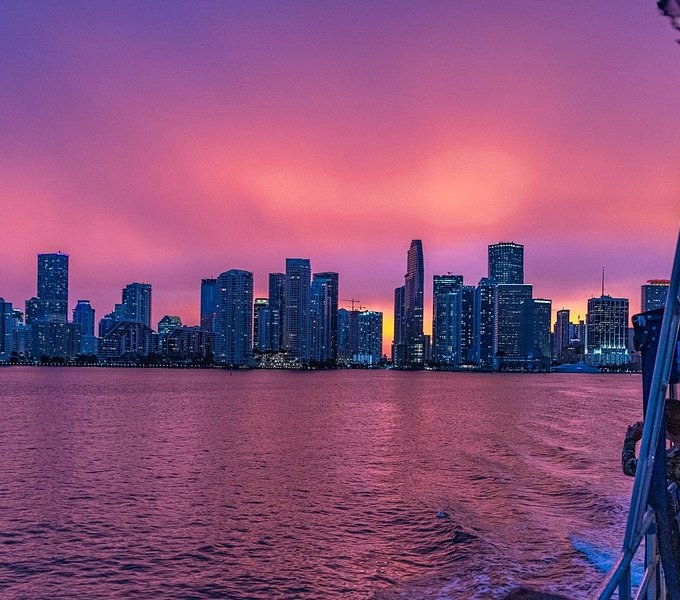
The short answer. In Miami the sun sets as early as 5:29pm in late November and early December and as late as 8:16pm at the end of June: a swing of 2 hours and 47 minutes. Full dark follows about 25 minutes after sunset. Many Miami Night guided tours leave at a set time all year, so the same 8pm departure is daylight in June, dusk in May and August, and deep night from mid-September to March.
Sunset and full dark, date by date
The table gives the U.S. Naval Observatory's times for downtown Miami in 2026, on the local clock. "Full dark" is the end of civil twilight: the sun is six degrees below the horizon and the last colour has gone from the sky over the bay. That is when the towers stand out lit against black rather than against blue. Other years fall within a minute or two, so read the times as "about".
| Date | Sunset | Full dark | An 8pm start |
|---|---|---|---|
| 15 January | 5:52pm | 6:16pm | Full dark |
| 15 February | 6:14pm | 6:38pm | Full dark |
| 7 March | 6:26pm | 6:49pm | Full dark |
| 8 March, clocks forward | 7:26pm | 7:49pm | Full dark |
| 15 March | 7:30pm | 7:53pm | Full dark |
| 15 April | 7:44pm | 8:08pm | Dusk |
| 15 May | 7:59pm | 8:24pm | Dusk |
| 15 June | 8:14pm | 8:40pm | Daylight |
| 27 June, latest sunset | 8:16pm | 8:42pm | Daylight |
| 15 July | 8:14pm | 8:40pm | Daylight |
| 15 August | 7:56pm | 8:20pm | Dusk |
| 15 September | 7:25pm | 7:48pm | Full dark |
| 15 October | 6:53pm | 7:16pm | Full dark |
| 31 October | 6:40pm | 7:04pm | Full dark |
| 1 November, clocks back | 5:39pm | 6:03pm | Full dark |
| 15 November | 5:32pm | 5:56pm | Full dark |
| 4 December, earliest sunset | 5:29pm | 5:54pm | Full dark |
| 15 December | 5:32pm | 5:57pm | Full dark |
The last column decides most evenings out. From mid-September to March, 8pm is already night. In April, May and August it is dusk, with colour still in the sky. From mid-June to mid-July the sun has not set at all.
How long dusk lasts
Miami is far enough south that dusk is short all year. In mid-June the gap between sunset and full dark is about 26 minutes; in mid-September about 23; in early December about 25. The sky goes from gold to dark blue to black quickly.
That matters for photographs. If you want the skyline lit against a deep blue sky, be on the water or on the causeway at sunset, not at full dark. Twenty minutes late and you have the black version. A cruise that sails "at sunset" gives you all three in its first half hour.
What the 8pm bus leaves into
The clearest case is the Big Bus night tour. It leaves Stop #1 at Bayside Marketplace at 8pm, and at 8:01pm from Soundscape Park in Miami Beach on Fridays, Saturdays and Sundays only. It is 75 to 90 minutes on an open-top bus with a live guide, and it does not stop to let you off.
In mid-June the sun sets at 8:14pm and it is dark by 8:40pm. So the first part of the ride is in daylight, and the dark arrives somewhere along the way. In December it has been dark for more than two hours by 8pm, and the whole route is lit. Book it from mid-September to March if the lights are the point; the other night city tours are compared side by side on their own page.
The two nights the clock moves
Daylight saving time runs from 8 March to 1 November in 2026, and those two dates move the evening by an hour overnight. On 7 March the sun set at 6:26pm; on 8 March, at 7:26pm. On 1 November it works the other way. Sunset jumps from 6:40pm on 31 October to 5:39pm the next day, and from then until March every evening tour starts after dark.
Cruises that move with the sun
The boats do not all keep one clock. A sunset cruise is timed to the sun, so its departure moves through the year; the time shows when you pick a date. It starts in daylight and comes back in the dark, which is the reason to book one. Fiesta's twilight cruise from Bayside is sold for the hour after sunset, and the private boats let you choose.
- Shared cruise after dark. The open-bar night cruise from Bayside is sold by its operator as two hours after dark. In June, check the time against the table.
- Your own hour. The private boat from the Miami River starts when you book it. Start an hour before sunset for the gold, the blue and the lights in one trip.
- Indoors. The salsa night at Mango's runs from 7:30pm to 10pm inside, so the season barely matters; you walk up Ocean Drive in the light in summer.
How the different evenings compare on time, place and price is on the night tour options page.
Heat, rain and storms after dark
A summer evening in Miami is warm long after the sun goes. The average low at Miami International runs from about 61°F in January to about 78°F in August, so a jacket is only for the top deck in winter. The wet season is the other half of the story. May to October each average more than six inches of rain, while November to April each get less than four.
The Atlantic hurricane season runs from 1 June to 30 November, with its peak around 10 September. A named storm can cancel the boats. Most tours here refund in full up to 24 hours ahead, so book with that in mind and check the forecast the day before. Month-by-month lows and rain are on Miami weather at night.
Picking your evening by month
- November to February. Full dark between about 6pm and 6:40pm; the driest months.
- March and October. Full dark between about 7:15pm and 8pm; March moves the clocks forward.
- April, May and August. Dusk at 8pm; hot, and May and August wet.
- September. Dark before 8pm again, at the peak of the hurricane season.
- Mid-June to mid-July. Light until about 8:40pm; June is the wettest month.
Where each evening starts, from Bayside to the far south-west farms, is on the meeting-point map, and the quick answers are on the FAQs.
Evenings to time against the sunset
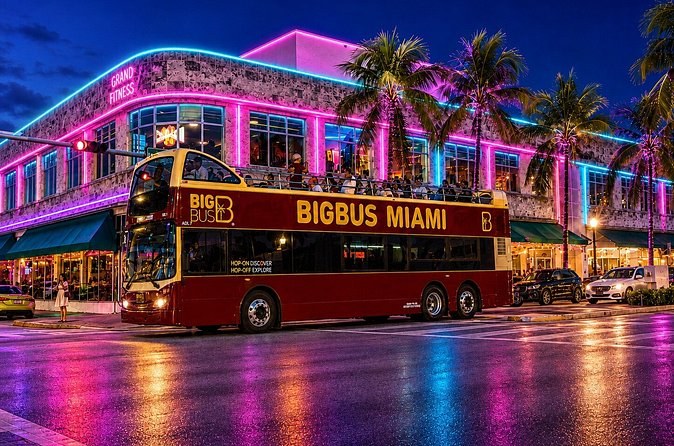
Miami: Open-top Bus Sightseeing Night Tour with Live Guide
Seventy-five to ninety minutes on an open-top bus with a live guide, leaving Bayside at 8pm: downtown, over the causeway and along South Beach, with no stops off the bus.
From $36 per person
Check Availability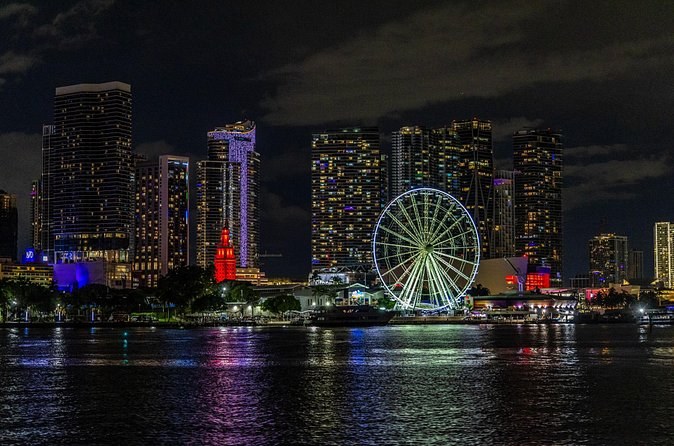
Miami Twilight Skyline Cruise
An hour on Biscayne Bay from Fiesta's booth at Pier 5 inside Bayside, past the port and Fisher Island as the light goes. Drinks are sold on board.
From $25 per person
Check Availability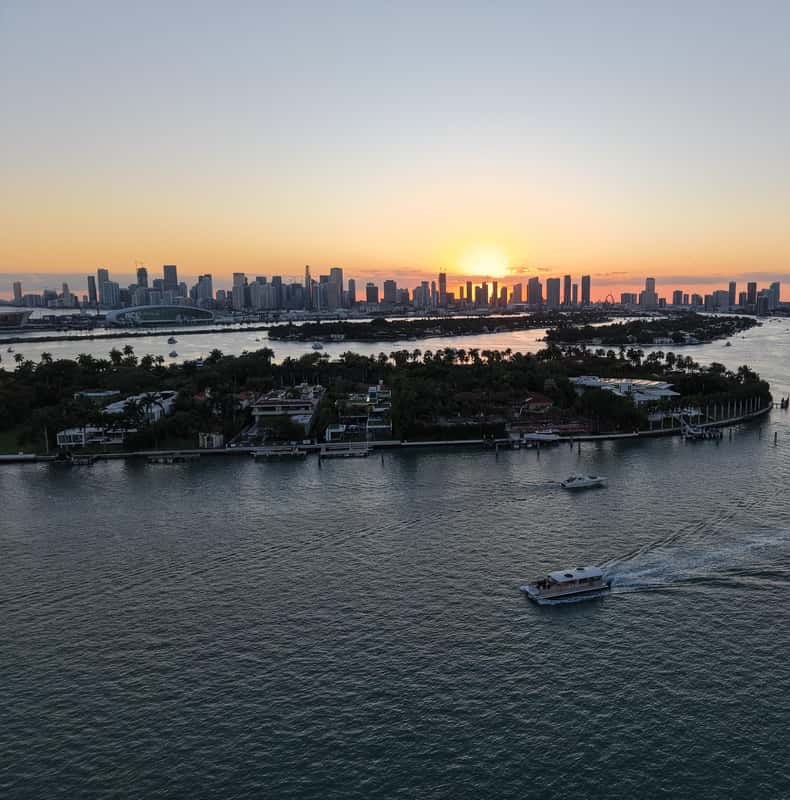
Miami Sunset Boat Tour: Celebrity Mansions & Skyline
Two hours on the bay and the Miami River from N Bayshore Drive, timed for the sunset and the lights coming on. Music, water and a restroom on board.
From $47 per person + $10 cash tip a person, which the listing calls required
Check AvailabilityNext: Find your month in the table, then pick a departure after its full-dark time. Every fare sits side by side on Miami Night Tours.